Pebble pool finishes in Palm Coast, FL
A natural-stone finish built to last through years of Florida sun and salt. Call to talk with a local contractor.
What a pebble finish is
A pebble finish is made of small, smooth natural stones mixed into a cement base. After it's applied, the top layer of cement is washed or acid-treated away to expose the stones. The result is a pool surface that's mostly stone, which is why pebble finishes hold up so well against the chemistry and sunlight that wear down plain plaster.
For Palm Coast homeowners who plan to stay in their home for a long time, a pebble finish is often the "do it once" choice. It typically outlasts plaster by a wide margin, hides small stains and debris, and gives the water a natural, lagoon-like color.
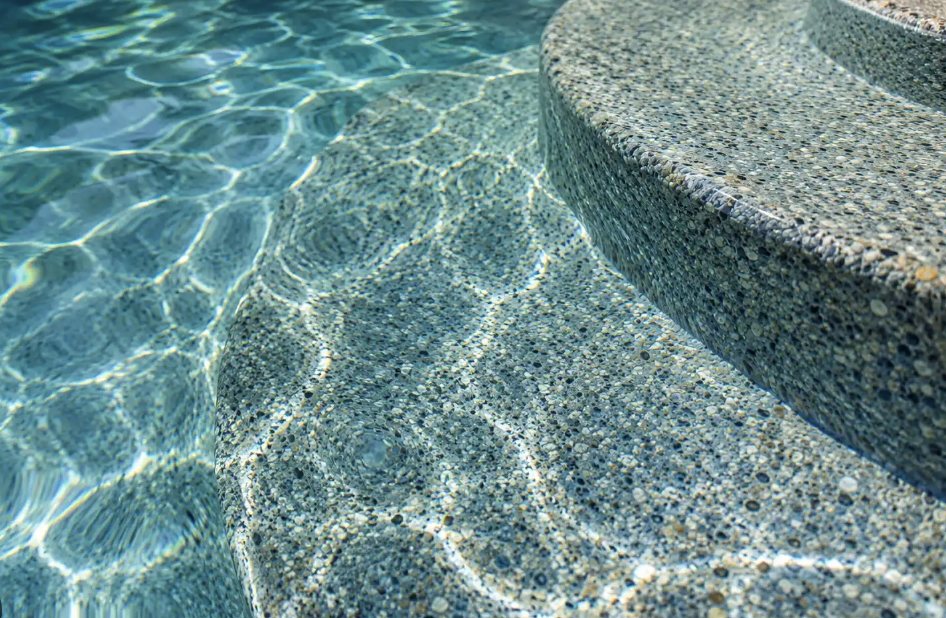
Choosing a pebble color and texture
Pebble finishes come in a wide range of blends, from light tan and white stones that give soft aqua water, to gray, blue and black blends that make the water look deep blue or green. Two things are worth knowing before you choose:
- Texture. Standard pebble feels bumpy underfoot, a bit like a smooth riverbed. If anyone in the house has sensitive feet, ask about smaller "mini pebble" or polished options, which feel noticeably smoother.
- Color in the water. A sample chip looks different once it's under four or five feet of water in bright Florida sun. Ask the contractor to show you photos of finished pools in the blend you like, and if possible look at a sample wet.
Is pebble right for your pool?
Pebble works on almost any concrete (gunite or shotcrete) pool that's structurally sound. It's a strong fit if:
- You use a salt chlorine generator, which can be hard on plain plaster.
- Your pool sits under oaks or near landscaping that drops leaves and causes staining.
- You'd rather pay more now and go longer before the next resurfacing.
It may not be the best fit if you want a perfectly smooth, bright white look, or if the pool is used mostly by small children who spend a lot of time sitting and crawling on steps and benches. In that case, quartz can be a good middle ground.
What the job involves
A pebble resurfacing follows the same prep as replastering: drain-down, removing loose finish, surface prep and repairs. The pebble mix is then applied, troweled, and exposed. Because it's heavier work than plaster, the crew is usually larger and the day is longer. After the pool is refilled, the start-up process still matters, even though pebble is more forgiving than plaster.
Call (386) 291-5262 to set up a free on-site estimate. The contractor can bring pebble samples and explain how each blend tends to look in a Palm Coast backyard.
Get a free resurfacing quote
Tell us a little about your pool. A local pool contractor will contact you to set up a free on-site estimate. Prefer to talk? Call (386) 291-5262.
Pool resurfacing services
- Pool resurfacing in Palm Coast
- Pool Replastering
- Quartz Finishes
- Fiberglass Pool Resurfacing
- Pool Tile & Coping
- Pool Deck Resurfacing